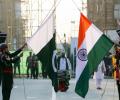
The UN Security Council will hold closed consultations on Monday on the situation between India and Pakistan after Islamabad sought an emergency meeting on the issue. Pakistan, which currently sits as a non-permanent member of the council, requested the meeting in light of rising tensions between the two countries following a terror attack in India. The meeting comes after India's foreign minister spoke with all council members except China and Pakistan, emphasizing the need to bring perpetrators of the attack to justice. The Pakistani envoy has argued that the situation in Jammu and Kashmir poses a threat to regional and international peace and security, justifying the need for a council discussion.
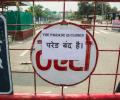
Pakistan's Foreign Minister Ishaq Dar has called for a 'composite dialogue' with India to address the contentious issues between the two sides.

The Indian government has revoked 14 categories of visas for Pakistani nationals, including business, conference, visitor, and pilgrim visas, following the terror attack in Pahalgam, Jammu and Kashmir. The decision was made after a Cabinet Committee on Security meeting, and the Home Minister has instructed state governments to ensure that all Pakistani nationals leave India by the set deadlines. The order does not apply to Long Term Visas (LTVs) and diplomatic and official visas issued to Pakistani nationals.

An 11-year-old boy's simple act of serving Indian soldiers during Operation Sindoor has become an inspiring story. Shavan Singh voluntarily provided tea, water, and lassi to Army jawans deployed in his village along the Indo-Pak border, earning him national recognition and the title of 'Youngest Civilian Warrior'.

'Where my husband lives, that is my home. I want to stay here with him'

Indian Army launched Operation Sindoor on May 7 to destroy nine terror infrastructures in Pakistan and Pakistan-Occupied-Kashmir in retaliation to the Pahalgam terror attack. All subsequent retaliations to Pakistani offensives were carried out under the moniker Operation Sindoor.

India has suspended the Indus Waters Treaty with Pakistan, citing sustained cross-border terrorism and security concerns. The treaty, brokered by the World Bank in 1960, governs the distribution and use of the Indus river and its tributaries between the two countries. India's decision follows a recent terror attack in Jammu and Kashmir, and has been met with strong condemnation from Pakistan.
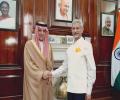
Saudi Arabia's Minister of State for Foreign Affairs Adel Aljubeir visited India on Thursday and held talks with External Affairs Minister S Jaishankar, focusing on de-escalating tensions between India and Pakistan. The visit comes as ties between India and Pakistan have further deteriorated following Indian military strikes on terror infrastructure in Pakistan. Iranian Foreign Minister Abbas Araghchi also arrived in New Delhi on a scheduled visit amidst the escalating tensions.

Pakistan Prime Minister Shehbaz Sharif expressed 'forever grateful' to US President Donald Trump for his 'timely' intervention in securing a ceasefire with India following a military conflict last year, a claim India has consistently rejected.

Arathi Menon, a native of Kochi, recounts the terror attack in Kashmir's Pahalgam that killed her father, N Ramachandran, and 25 others. Menon, her father, and her six-year-old twin sons were walking through a fenced grassland in Baisaran when the attack happened. The family crawled under the fence to escape, but a man emerged from the woods and opened fire. Menon's father collapsed, and she fled with her sons into the forest. Despite the trauma, Menon found compassion from strangers who helped her, including her driver Musafir and another man, Sameer. Menon concealed the tragedy from her mother, pretending that Ramachandran was injured and receiving treatment. She only told her mother the truth after they landed in Kochi. The mortal remains of Ramachandran were brought to Kochi airport on Wednesday, and his final rites will be held at the Edappally public crematorium on Friday.

Congress leader Rahul Gandhi on Friday accused External Affairs Minister S Jaishankar of "collapsing" India's foreign policy and questioned the government's handling of the recent tensions with Pakistan, particularly the US President Donald Trump's role as a mediator. Gandhi's remarks come amidst a war of words between the Congress and the ruling BJP over their leaders' statements on the Indo-Pak conflict.

A Kerala man, Ramachandran (65), was killed in a terrorist attack in Kashmir's Pahalgam, leaving his wife unaware of his death. Ramachandran and his wife, Sheela, were on a holiday with their daughter and grandchildren when the attack took place. The couple was known for their love of travel and had recently returned to Kochi after living in the UAE. The family is in shock and mourning Ramachandran's death. The Kerala government has launched a help desk to assist Keralites affected by the terror attack.

Interacting with reporters in Kolkata, the Trinamool national general secretary reiterated that his party stood with the government in matters of national interest, combating cross-border terrorism, and safeguarding sovereignty.
The Congress Working Committee (CWC) condemned the Pahalgam terror attack, calling it a direct assault on the values of the republic. The party accused the BJP of exploiting the tragedy to promote discord and polarization, while urging for unity and solidarity in the face of adversity. The CWC also demanded a comprehensive analysis of the intelligence failures and security lapses that led to the attack.
The United Nations Security Council (UNSC) has strongly condemned the terrorist attack in Jammu and Kashmir, urging that those responsible be held accountable and brought to justice. The Council issued a press statement expressing its deepest sympathy to the victims' families and calling for all states to cooperate in combating terrorism. UN Secretary-General Antonio Guterres also expressed concern about the situation, urging India and Pakistan to exercise restraint.

Terrorists opened fire at a popular tourist spot near Kashmir's Pahalgam town on Tuesday afternoon, killing 26 people, mostly holidayers from other states, in what is the deadliest attack in the Valley since the Pulwama strike in 2019.

India's Foreign Secretary Vikram Misri said on Thursday that the choice of de-escalation is with Pakistan, as India only responded to the April 22 Pahalgam terror attack, which killed 26 people. He added that Pakistan has been escalating the situation with cross-border terrorism against India for decades.

The National Investigation Agency (NIA) has started interviewing eyewitnesses, including tourists, in connection with the deadly terrorist attack in Pahalgam, south Kashmir. The attack, carried out by terrorists from the Pakistan-based Lashkar-e-Taiba (LeT), claimed the lives of 26 people on April 22. Initial investigations suggest that five to seven terrorists were involved, aided by local militants trained in Pakistan. Security forces are conducting massive operations to hunt down the terrorists in the dense jungles of the Pir Panjal range.
A US federal government commission has raised concerns about the state of religious freedom in India, recommending its designation as a 'Country of Particular Concern' and suggesting targeted sanctions.
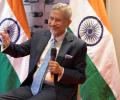
'As far as I'm concerned, how effective the Rafale was or frankly, how effective other systems were -- to me, the proof of the pudding is the destroyed and disabled airfields on the Pakistani side'

The Instagram accounts of leading current and former Pakistani cricketers were blocked in India on Friday.

India's Air Chief Marshal A P Singh met Prime Minister Narendra Modi on Sunday to discuss the security situation arising from escalating tensions with Pakistan. The meeting comes after a similar briefing by the Navy Chief on the situation in the Arabian Sea. This follows a deadly terror attack in Pahalgam, which India has blamed on Pakistan. India has taken several retaliatory measures, including suspending the Indus Waters Treaty and banning imports from Pakistan.
The United States on Thursday said it supports India's right to defend itself and its fight against terrorism as US Defence Secretary Pete Hegseth dialled Defence Minister Rajnath Singh amid rising tensions between India and Pakistan over the Pahalgam terror attack.
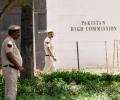
Pakistan is holding a high-level security meeting to formulate a response to India's suspension of the Indus Water Treaty and downgrading of diplomatic ties. The meeting, convened by Prime Minister Shehbaz Sharif, will include the National Security Committee, three services chiefs, and key ministers. The move comes after India blamed Pakistan for a terror attack in Pahalgam, which Pakistan has denied. Diplomatic observers warn that the escalation could further strain relations between the two countries.

Players of both India A and Pakistan Shaheens teams on Sunday avoided handshakes before the start of their match in the Asia Cup Rising Stars tournament here, continuing the trend started by the senior side during the Asia Cup in September.

The National Council of Educational Research and Training (NCERT) is developing a special classroom module on Operation Sindoor to help students learn about India's defence strategy and diplomatic response, according to sources.
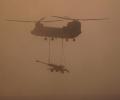
The Indian Air Force will carry out a two-day mega military exercise along the border with Pakistan from Wednesday that will involve all the frontline fighter jets including Rafale, Su-30 and Jaguar aircraft. The exercise is taking place amid heightened tensions between India and Pakistan over the April 22 Pahalgam terror attack that killed 26 people. India's civil aviation authorities have already issued a Notice to Airmen (NOTAM) for the major air exercise that will largely take place along the southern and western section of the Indo-Pakistan border. India's frontline fighter jets including the Rafale, Su-30 MKI, MiG-29, Mirage-2000, Tejas and AWACS (Airborne Warning and Control System) aircraft are set to feature in the exercise.
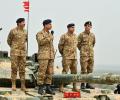
Pakistan Army Chief Asim Munir has described terrorism in Jammu and Kashmir as a 'legitimate struggle', saying his country would always stand by the people of Kashmir in their struggle.
In a fortunate twist of fate, a family from Kerala narrowly escaped the recent terror attack in Pahalgam, Jammu and Kashmir, thanks to a horse-riding accident that delayed their journey.
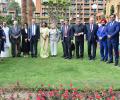
All-party parliamentary delegations on Monday met with the leaders of several countries and highlighted India's resolve to combat terrorism, which they stressed must be eradicated in the interests of all humanity.
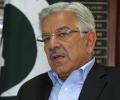
Regarding the possibility of talks, the minister said he was not aware of any such potential engagements.
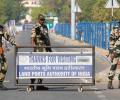
Pakistan Volleyball Federation on Sunday said India have withdrawn their contingent from the next month's Central Asian Volleyball in Islamabad.

"As long as PoK exists, terrorist activities will continue. I request Prime Minister Narendra Modi that if Pakistan does not hand over PoK, we must declare war against them," Athawale said, calling for another surgical strike against the neighbouring country.

Pakistan has banned Indian-flagged ships from entering its ports with immediate effect after India imposed fresh punitive measures, including a ban on the import of goods and entry of Pakistani vessels into its ports, against Islamabad amid heightened tensions following the Pahalgam terror attack. The move comes after India announced a raft of punitive measures against Pakistan, including the suspension of the Indus Waters Treaty, shutting down of the only operational land border crossing at Attari, and downgrading of diplomatic ties following the terror attack. The Pakistan Army has also conducted a successful training launch of the Abdali Weapon System, a surface-to-surface missile with a range of 450 km, saying it was aimed at ensuring the operational readiness of troops and validating key technical parameters. India considers the test launch of the ballistic missile a "blatant" act of "provocation."
Records stretching back to 1947 suggest a consistent strategy by Pakistan's military and intelligence apparatus, the Inter Services Intelligence (ISI), of using terrorism as a state policy against India.
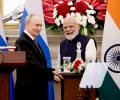
India and Russia have called for an uncompromising global fight against terrorism without hidden agendas and double standards. Prime Minister Narendra Modi asserted that the menace is a direct attack on the values of humanity.

'The Pahalgam terror attacks and the conflict that followed were a big blow to local tourism.' 'And just when things were starting to go back to normal, the floods, caused by heavy rain, spoiled all chances of a bounce-back this season.'
Since the Pahalgam terrorist attack, China, Pakistan's "ironclad ally", while condemning it, has called for restraint, besides a fair and swift investigation into the attack.
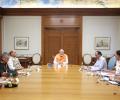
Prime Minister Narendra Modi chaired a meeting with top defence officials, including Defence Minister Rajnath Singh, National Security Advisor Ajit Doval and the chiefs of three services, amid India weighing its countermeasures following the Pahalgam terror attack which left at least 26 civilians, mostly tourists, dead. Modi has vowed to pursue the terrorists behind the attack and their patrons, a clear reference to Pakistan, to the "ends of earth" and inflict harshest punishment on them.

Citing "cross-border linkages" to the horrific attack, India has promised severe punishment to those involved in the strike that triggered wide-spread outrage within India and abroad.
